AI and Real-World Evidence in HTA: Insights from our Question of the Day Boards at ISPOR Europe 2026
During ISPOR Europe 2026 in Vienna, the YHEC team had the pleasure of speaking with many delegates across the exhibition hall. Alongside presenting 17 research posters and hosting an issue panel on environmental sustainability, we invited visitors to our booth to weigh in on our daily ‘Question of the Day’ boards. These interactive boards sparked candid conversations around two of the hottest topics in health economics outcomes research (HEOR) and health technology assessment (HTA): generative artificial intelligence (AI) and real-world evidence (RWE). Here is an insight into how delegates voted and the key themes that emerged from our discussions at the booth.
Day 1: The Five-Year Impact of Generative AI on HTA Workflows
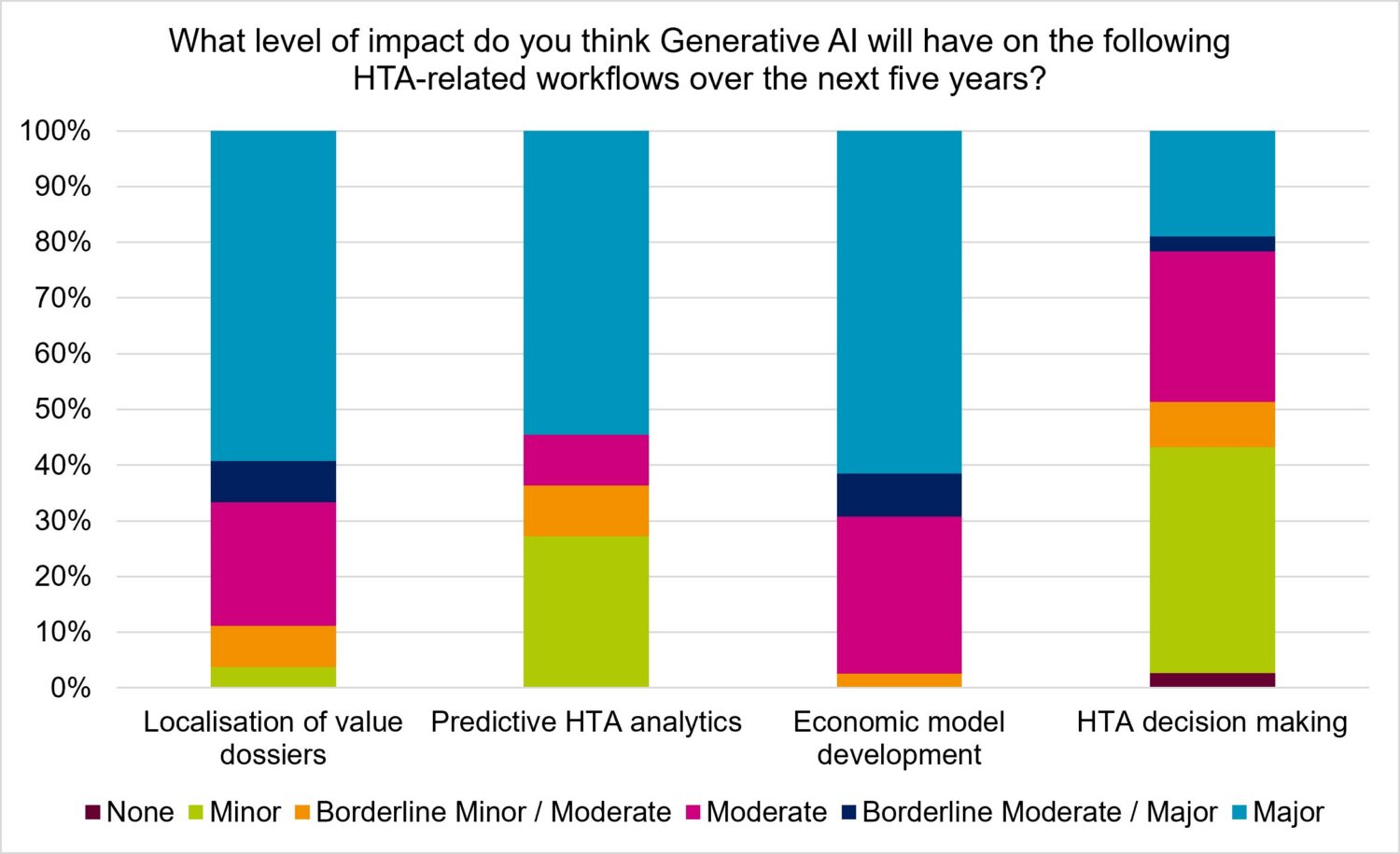
On Day 1, we asked delegates: “What level of impact do you think Generative AI will have on the following HTA-related workflows over the next five years?” The workflows included localisation of value dossiers, predictive AI analytics, economic model development, and HTA decision making. Participants could rank the impact on each workflow as minor, moderate or major. With Day 1 conference sessions heavily focused on AI with the launch of both the NICE AI methods for evidence framework and ISPOR’s Special Task Force report on AI use in systematic literature reviews, this board saw lots of engagement from visitors who had already formed strong opinions on where the technology is heading (Figure 1).