
Drug development and market access is often challenging for rare disease therapies. There are numerous obstacles in the field, such as small and diverse patient populations, which means there is often limited evidence available. YHEC’s Andria Joseph explores some of the challenges in rare diseases, specifically relating to patient-reported outcomes, and provides potential solutions for overcoming these.
Tell us a bit about yourself and your role
As a Project Director, I lead a variety of qualitative and quantitative projects at YHEC. This includes leading the development of standardised outcome sets in a number of disease areas, such as heart valve disease, neurodevelopmental disorders, autism spectrum disorders, and hand and wrist conditions [1-4]. Moreover, I have experience in research qualifying quality of life in studies such as time trade-off and discrete choice experiments in rare diseases. In previous roles, I have gained experience in NHS commissioning, which helps me to understand patient journeys in the UK.
Can you briefly explain why patient engagement is so important in rare diseases?
Any information about a patient’s health condition that comes directly from the patient – without input from doctors, friends or family – is considered a ‘patient-reported outcome’. By collecting this data, we can gather first-hand accounts of the impact that a treatment has on a patient’s quality of life. This is important because, for example, while a hip replacement procedure may be clinically successful on paper, the patient might still report that “it just doesn’t feel right” or that they don’t feel confident bearing weight.
Rare diseases often present with a wide range of symptoms that can vary substantially between individuals; patient-reported outcomes can capture this variability from the patient’s perspective, providing a more thorough understanding of the disease’s impact and ensuring that clinical trial data for prospective treatments are representative of the actual benefits experienced by patients. As such, patient-reported outcomes are crucial metrics for rare disease therapies. Patient engagement can also highlight the unmet need in rare diseases. This can be particularly useful when trying to demonstrate product value, especially when clinical data are limited or the cost-effectiveness case is more difficult
Regulators and payers are increasingly recognising the usefulness of patient-reported outcomes when assessing the effectiveness and value of treatments. When patient-reported outcomes are transparently shared, they can substantially influence reimbursement decisions, ensuring that patients have access to necessary treatments and therapies in a timely manner.
How do challenges with patient engagement currently affect the industry?
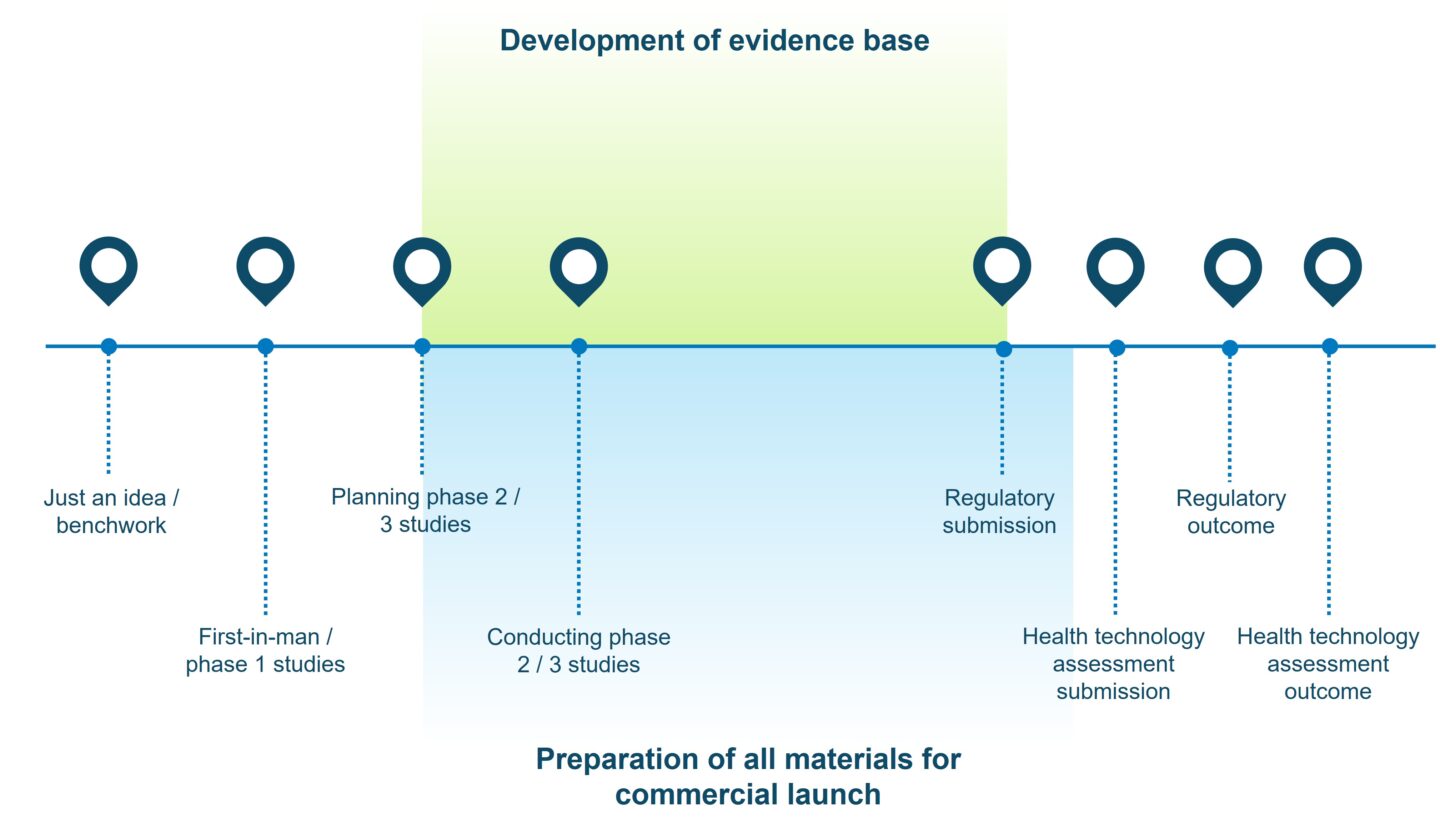
It can take a long time for a pharmaceutical company to bring a product to market – often taking over ten years from an initial idea to a commercially available product. Historically, this time has largely been spent developing evidence for global regulatory submissions (i.e. testing the safety, effectiveness and efficacy of the project). However, there’s a parallel, and often overlooked, body of work that is required for a successful commercial launch: health technology assessment (Figure 1).
There can be a disconnect between the regulatory and commercial mindsets. This often leads to situations where the information needed for health technology assessment, particularly about patient-reported outcomes, is either not collected, is collected using an inappropriate instrument, or is collected with a very limited follow-up schedule. In such cases, mapping disease-specific measures to a standard utility score can be essential. This is an area where our team’s expertise can help ensure robust, defensible results.
What are the biggest challenges related to patient-reported outcomes in the rare diseases space?
Engaging patients and their families effectively can be challenging due to the emotional and physical burdens they face. These burdens can limit their availability and willingness to participate in studies and surveys, making it difficult to gather comprehensive data.
Moreover, engaging patients over extended periods can lead to survey exhaustion, where patients become fatigued by repeated requests for information. This exhaustion can result in lower response rates and less reliable data. Additionally, not all patients have equal access to engagement opportunities, particularly those in remote or underserved areas. Overcoming these challenges requires sensitive and flexible engagement strategies that respect the time and circumstances of patients and their families.
Another significant challenge in patient engagement is the fragmentation of data across various healthcare systems and institutions. Efforts to connect and share these data are often hampered by privacy concerns, lack of interoperability between systems, and institutional reluctance.
Do you see any potential solutions for these challenges?
Early and continuous patient engagement is essential in the development and approval of treatments for rare diseases. This engagement should begin in the initial stages of research and continue throughout the lifecycle of the treatment. By involving patients early, pharmaceutical companies and researchers can gain valuable insights into the patient experience, which can shape the design of clinical trials.
Collaboration among stakeholders (including patients, healthcare providers, researchers, and pharmaceutical companies) is fundamental to achieving reimbursement objectives in rare diseases. Each stakeholder brings a unique perspective and expertise that contribute to a holistic understanding of the disease and its impact. Patients provide first-hand experiences, while healthcare providers offer clinical insights. Researchers contribute scientific knowledge, and pharmaceutical companies bring the resources needed for treatment development.
Transparency in patient engagement builds trust and credibility, which are vital for successful reimbursement outcomes. Transparent communication ensures patients feel valued and heard, encouraging active participation. It also fosters a sense of ownership and partnership between patients and healthcare providers, allowing the collection of authentic and meaningful data.
Remote patient-reported outcome collection can miss the human element; if sensitive questions stir up fear or distress, there’s no one there to provide support. In-person clinics aren’t always better; patients may be handed a quality of life survey at the end of an exhausting appointment, with no time to reflect and no clinicians nearby to talk. Some researchers argue that patients should be involved not only in designing patient-reported outcome tools, but also in conducting the interviews themselves. This peer-led approach could foster deeper empathy and draw out richer, more honest insights.
Can technology help to meet some of the challenges?
The integration of technology in capturing patient-reported outcomes presents both opportunities and challenges. While digital platforms can facilitate real-time data collection, they also introduce barriers related to accessibility and usability. Not all patients are comfortable or familiar with using technology and this can lead to underrepresentation of certain patient groups. Ensuring that technological solutions are user-friendly and inclusive is essential for accurate and comprehensive data collection.
Education plays a pivotal role in empowering patients, enabling them to actively participate in their healthcare journey. Educated patients are better equipped to engage in meaningful discussions about their treatment options, provide valuable feedback, and advocate for themselves throughout the reimbursement process.
Is the role of patient organisations important?
Patient organisations play a vital role in bridging the gap between patients and researchers. They can facilitate engagement by providing a trusted platform for communication and advocacy. However, these organisations often face resource constraints that limit their capacity to support large-scale engagement efforts. Additional funding and collaboration can increase the ability to effectively engage patients and gather valuable data.
What are the main points that you would like people to understand about patient engagement in the rare diseases space?
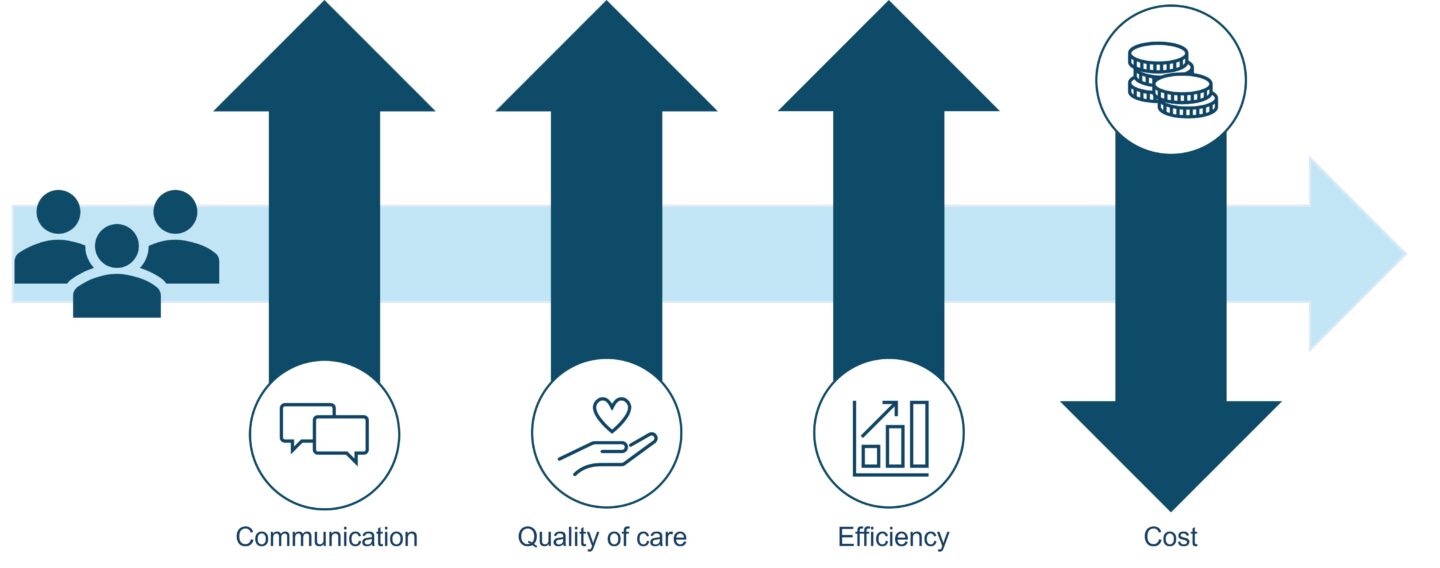
Developing efficient engagement strategies requires a multifaceted approach (Figure 2). This includes leveraging digital tools for data collection, ensuring inclusivity in engagement efforts, and maintaining open communication with patients. Strategies should be patient-centred, flexible and adaptable to the varying needs of the patient population. Regular feedback loops and adjustments based on patient input can also enhance the effectiveness of engagement efforts.
How can YHEC help clients in this area?
YHEC has considerable expertise in the selection, validation and analysis of patient-reported outcome data. We undertake patient-reported outcome projects for clients across all stages of a product lifecycle, from early-stage advice on patient-reported outcomes and study design to preparing health technology assessment submissions. Some of our other patient-reported outcome services include the assessment of patient preferences using discrete choice experiments, Delphi panels, health state utility studies, and mapping from disease-specific patient-reported outcomes to generic patient-reported outcomes, to name a few.
Contact us
To find out more about how we can support your patient-reported outcomes and rare disease needs, please contact us.
References
- Lansac E, Veen KM, Joseph A, Jaber PB, Sossi F, Das-Gupta Z, et al. The first International Consortium for Health Outcomes Measurement (ICHOM) standard dataset for reporting outcomes in heart valve disease: moving from device-to patient-centered outcomes. European Journal of Cardio-Thoracic Surgery. 2025.67(2):ezae254.
- Mulraney M, De Silva U, Joseph A, Fialho MdLS, Dutia I, Munro N, et al. International consensus on standard outcome measures for neurodevelopmental disorders: A consensus statement. JAMA network open. 2024.7(6):e2416760-e60.
- Joseph A, Chong I, Das-Gupta Z, de Lima CB, Dixon D, Dovbnya S, et al. Development of a standardized set of outcomes for autism spectrum disorder: The International Consortium for Health Outcomes Measurement (ICHOM). Research in Autism Spectrum Disorders. 2024.117:102451.
- Wouters RM, Jobi-Odeneye AO, de la Torre A, Joseph A, Shin AY, MacDermid JC, et al. A standard set for outcome measurement in patients with hand and wrist conditions: consensus by the International Consortium for Health Outcomes Measurement Hand and Wrist Working Group. The Journal of hand surgery. 2021.46(10):841-55. e7.