Key conference themes: Artificial intelligence (AI) governances and EU Joint Clinical Assessment (JCA)
Discussions in Vienna centred on navigating the early implementation of the EU JCA, integrating AI and real-world evidence (RWE) into health technology assessment (HTA), and balancing global pricing pressures with timely patient access. In terms of AI, major milestones were unveiled during the conference, including NICE launching its AI methods for evidence framework and ISPOR publishing its Special Task Force report, “Generative Artificial Intelligence for Systematic Literature Reviews: A Good Practices Report of an ISPOR Special Task Force.” With systematic literature reviews representing one of the most mature use cases in HEOR, delegates actively debated what responsible implementation looks like in practice. While advances are underway across the review pipeline, the consensus was that the current value of AI remains largely concentrated in the screening process. Uncertainty still persists around governance and accountability for AI outputs and human oversight remains indispensable.
Meanwhile, discussions around the EU JCA centred on early operational lessons. While five JCA reports have been published to date (alongside four terminated assessments), those published so far have been relatively self-contained in scope. Looking ahead, the key challenge remains the scoping process and PICO (Population, Intervention, Comparator, Outcomes) proliferation, where consolidating requirements across all 27 Member States risks generating highly complex multi-PICO matrices.
Making RWE “decision-grade” was also a key feature of the conference, with sessions focusing on linking multisource datasets to map full patient journeys, standardising cross-border real-world data validation, and overcoming payer scepticism so that observational data can reliably inform pricing and reimbursement decisions. Plenaries and issue panels also explored evolving definitions of healthcare value and the incorporation of patient-reported outcomes (PROs) and sustainability metrics into HTA decision-making.
YHEC’s contributions to ISPOR Europe 2026
On Monday 09 November, YHEC hosted an issue panel titled “Integrating Environmental Sustainability into HTA: Global Policy Archetypes and Future Directions for Access Decision-Making”, featuring speakers Stuart Mealing (YHEC), Sandro Gsteiger (Roche) and Fiona Adshead (Sustainable Healthcare Coalition). As climate change increasingly affects population health and healthcare system resilience, HTA agencies are beginning to consider how environmental sustainability should factor into healthcare decision-making. The session examined emerging international approaches, exploring the policy rationale, methodological challenges and practical trade-offs involved in bringing environmental metrics into pricing and value assessments.
Specifically, the speakers covered the global policy landscape, exploring the industry perspective on why sustainability is becoming a major policy priority and what it means for innovation and market access. This included introducing a four-part framework categorising global systems into ‘green pioneers’, ’clinical arbiters’, or ‘industrial strategists’. Despite taking place late on the first day, the session drew a crowd of 100 to 150 attendees. The panellists’ perspectives complemented one another well, culminating in a shared call to action with concrete “wishlists” designed to move the sector past high-level discussion and into practical implementation. Engagement from the floor was a major highlight, sparked by a lively back-and-forth and thoughtful questions directed at all of the speakers.
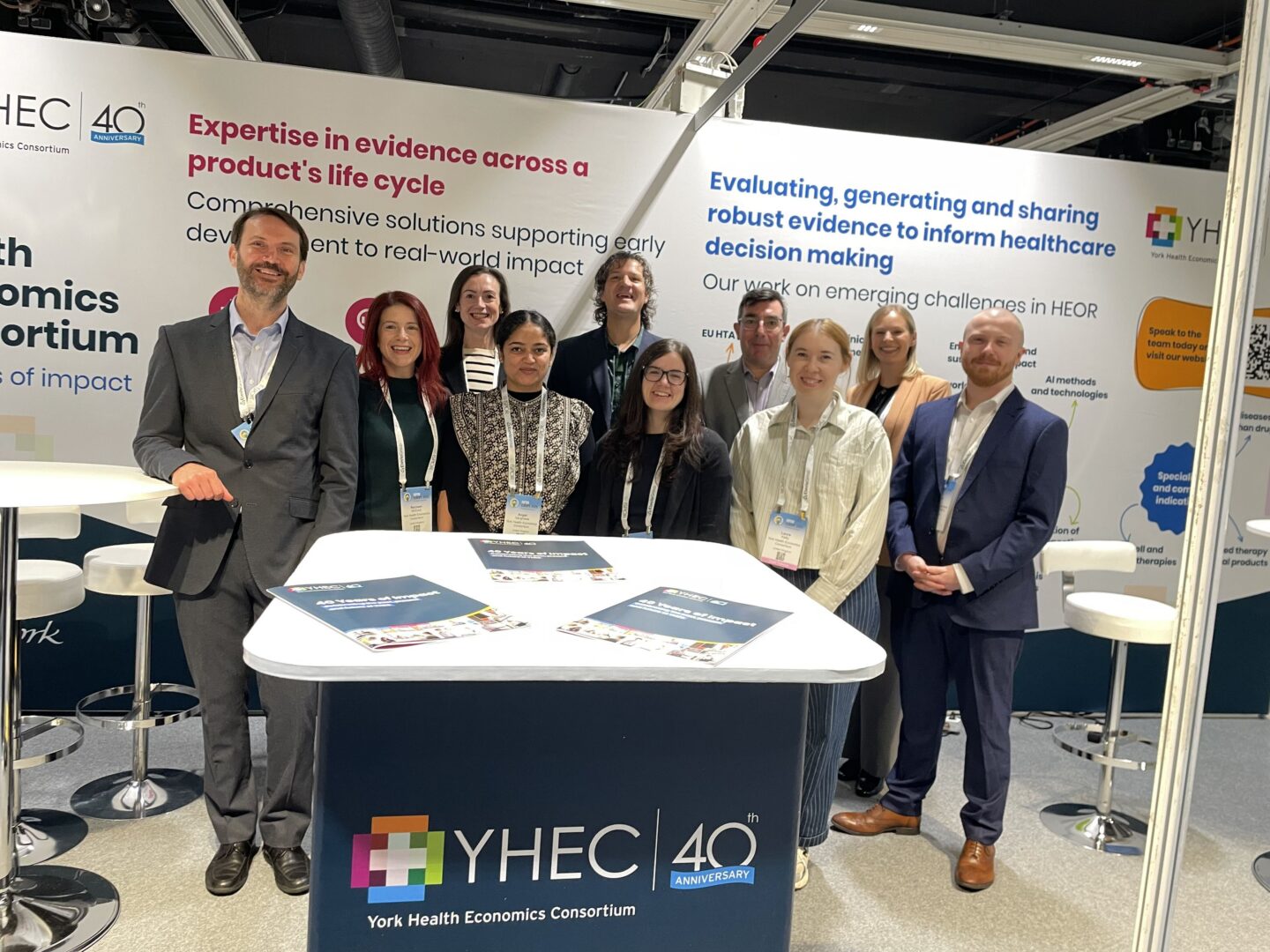
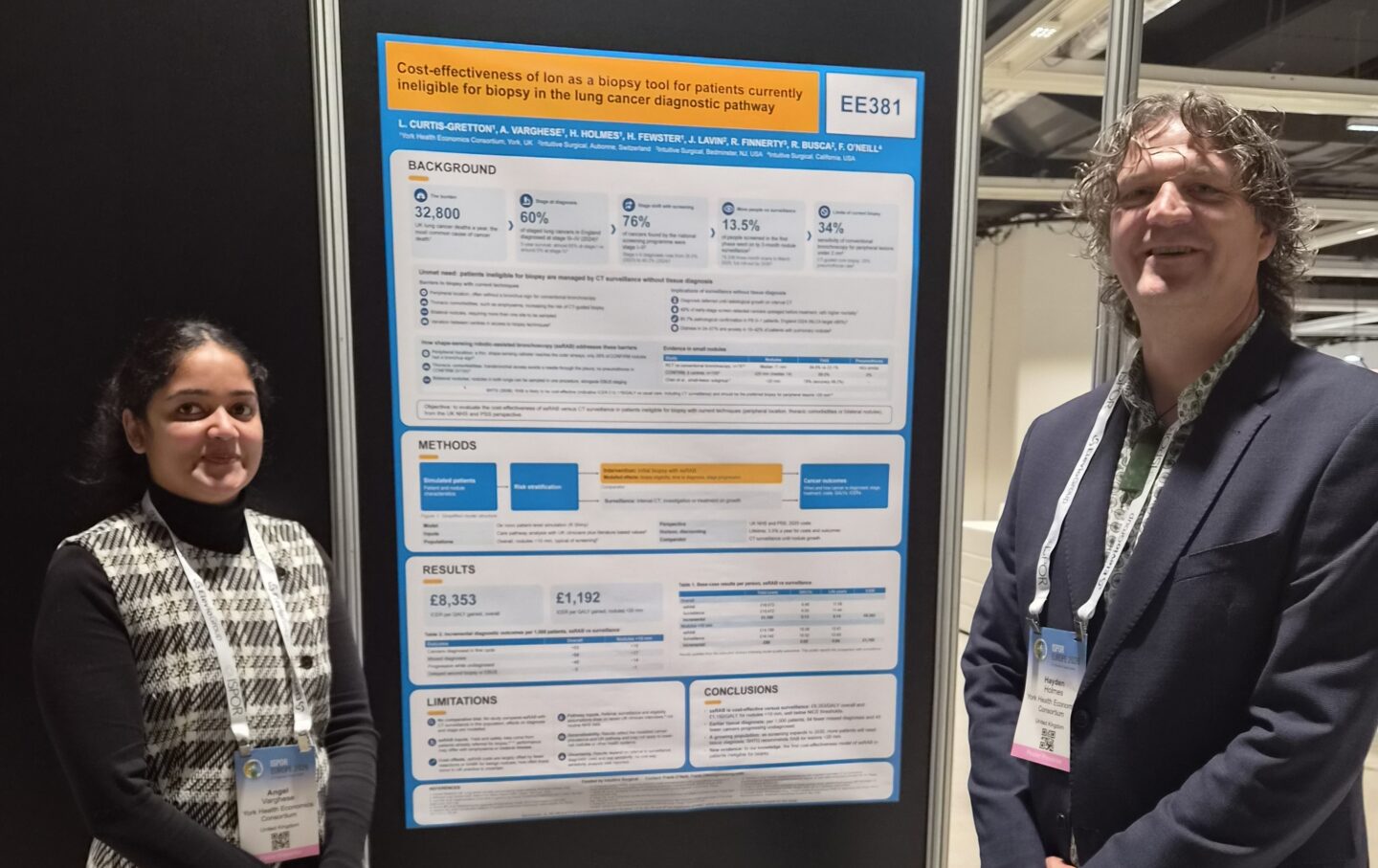
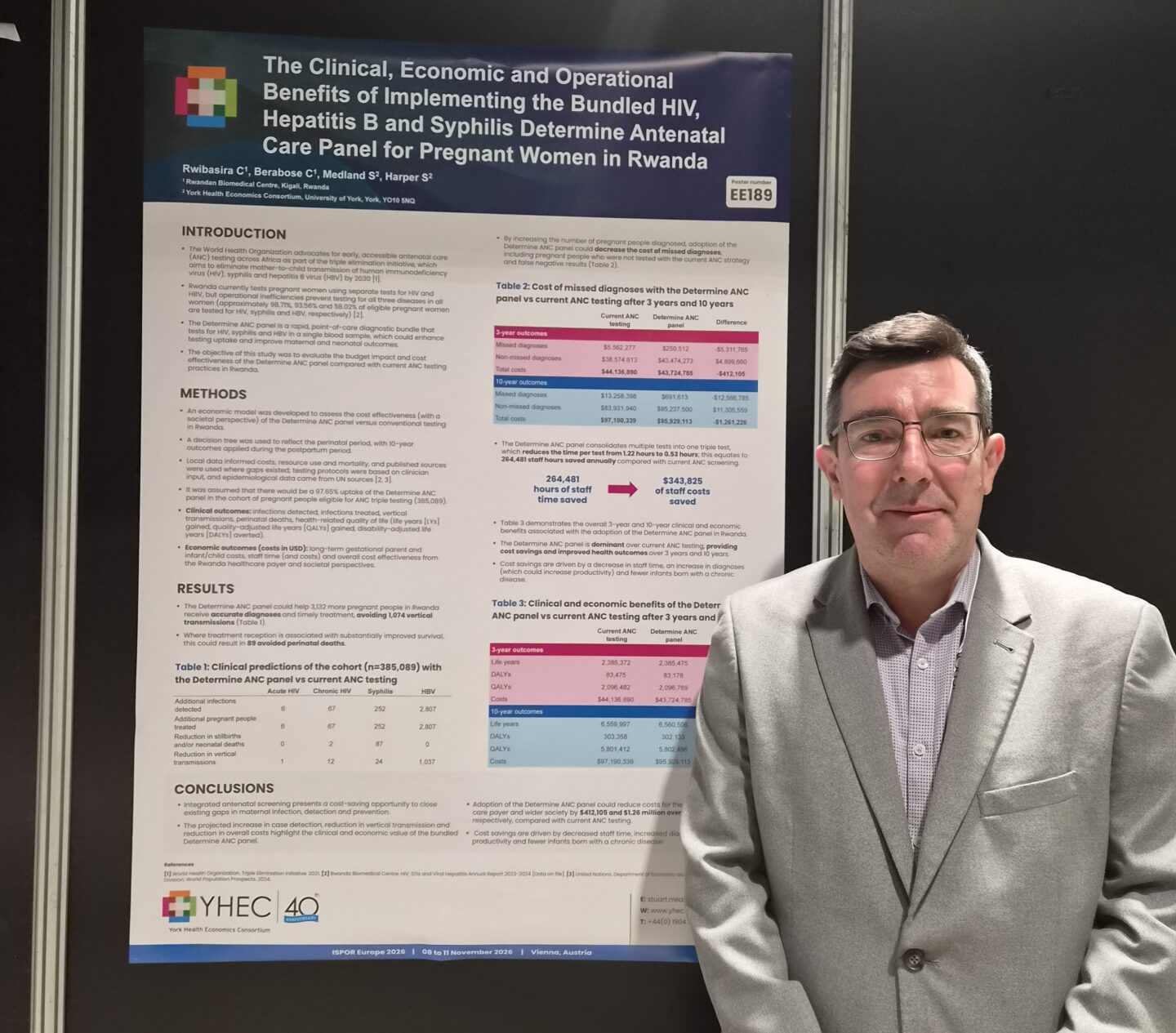
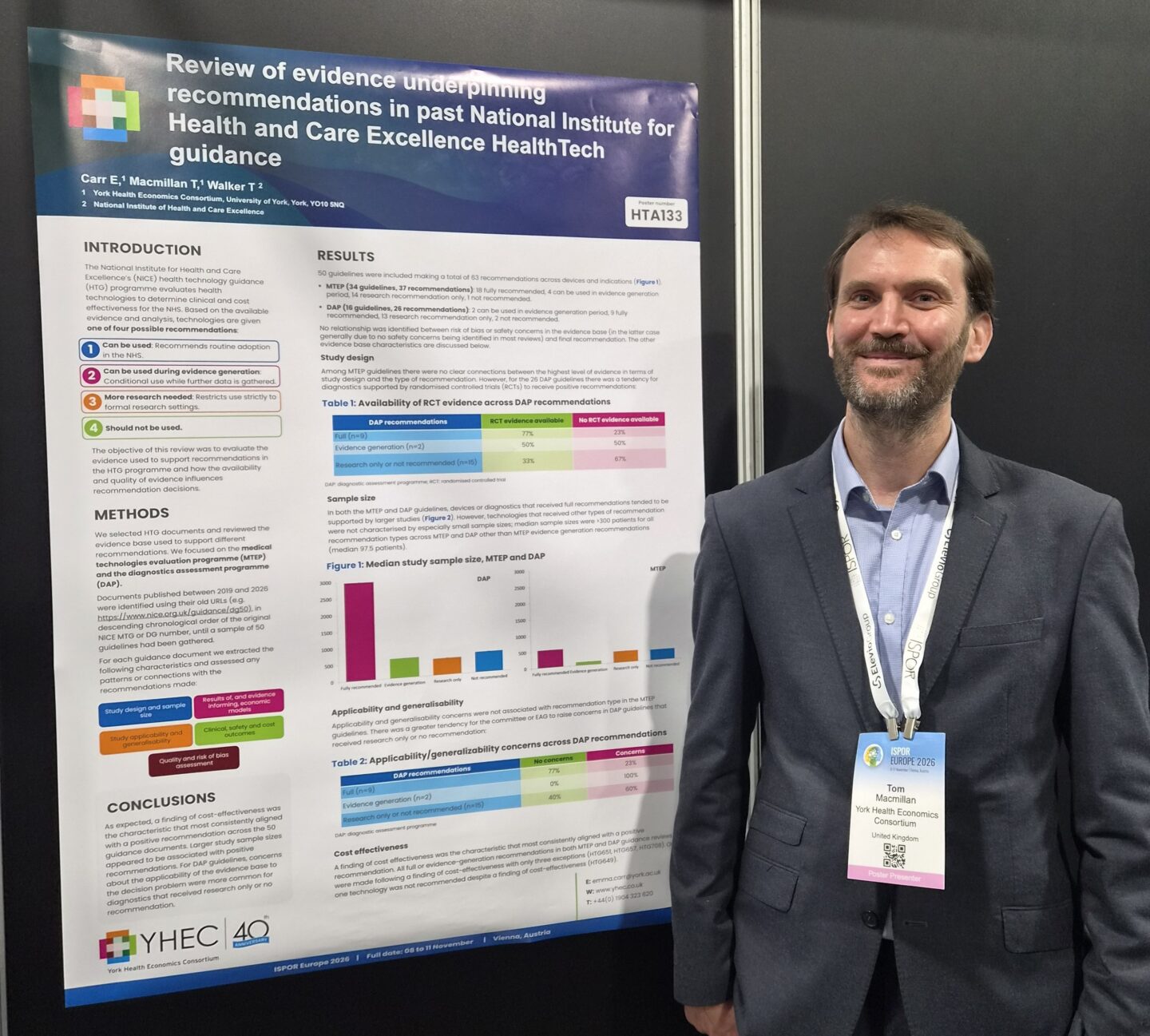
YHEC also had a strong presence in the exhibition hall this year, presenting 17 posters covering a wide range of methodologies, systematic reviews and economic evaluations. A particular highlight was Tom Macmillan winning a Research Presentation Award, with one of his posters recognised as being in the top 5% of research submitted to ISPOR Europe 2026. This poster presented a review of the evidence underpinning recommendations in past National Institute for Health and Care Excellence (NICE) HealthTech guidance. To read more about the poster, please see Tom’s submitted abstract.